

Dawkins: what he, and we, need to learn


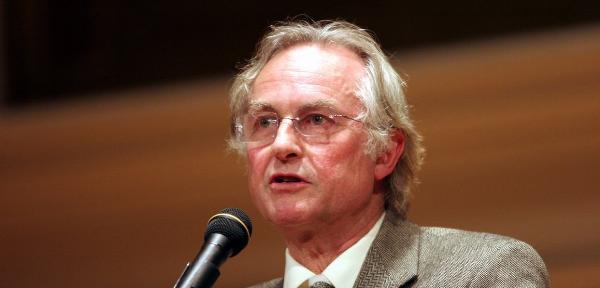
Oxford philosopher, Gerard J Hughes SJ, takes a critical look at the views of the 'arch-enemy of religion', Richard Dawkins, but also notes how the attitudes and behaviour of some Christians play into his hands.
How do you react to Professor Richard Dawkins' views on the pernicious nature of all religion and of Christianity in particular? A mixture of outrage, a certain sneaking sympathy, and a desire to hear what might be said by way of serious reply? All three responses are fair enough, I think. In the following brief reflections, I am not going to have much to say about what is outrageous in Dawkins. For detailed, measured and trenchant responses, I would thoroughly recommend the books by Alistair McGrath and Keith Ward. What I want to do here is to suggest what Christians might have to learn from the fact that some of his criticisms do strike a sympathetic chord in many of his readers, and even in many of his Christian readers. In so doing, I hope to show why it is that his many valid points do not in the end succeed in making his overall case.
Dawkins returns time and again to the same basic points. The first is that Christians, in their belief that the bible is an inspired book, are committed either to believing many things which are scientifically indefensible, or to adopting various dishonest evasive manoeuvres to try to deny that the most absurd of these statements are in the bible at all. His second point is that Christians hold a view of faith which places religious faith completely beyond reasonable discussion or scientific counter-argument. In our modern world, such unsupported prejudices deserve no credence, and can be positively damaging. Any beliefs worthy of respect must stand up to scientific criticism. Science is the gold standard for all truth.
I shall argue that we Christians have ourselves unfortunately provided some grounds for each of the two main criticisms: I shall further argue that there is no need for us to do anything of the kind; and I shall conclude with some brief thoughts about Dawkins' views of science.
What the Bible actually claims to be true
It seems undeniable that most Christians, or at least those in the West, have gradually over the centuries lost touch with the languages and cultures in which the biblical texts, both Jewish and Christian, were written. The result is that Christian tradition generally has tended more and more to take all narrative passages in the biblical books as if they were descriptions of historical events, often entirely missing the crucial theological messages which those passages contained.
How do we typically try to express truths? Our normal style is to try to formulate straightforward predominantly factual statements, shorn of metaphor, lacking in poetic charm, but making the most of clarity and precision. I say that predominantly we express ourselves like that; but even we do other things as well. Contemporary scientists, at least when they are working at the limits of our understanding, themselves have to use metaphors and models - black holes, tiny strings vibrating in ten dimensions, particles with spin and charm, selfish genes. And more broadly, we might wish to insist that there are many truths about ourselves and our world which cannot be properly captured other than in poetry. Still, in our post-Enlightenment culture we do tend to focus primarily on the straight, unvarnished, precise facts. It was not always thus, however. The emphasis on metaphor and models played a larger role in civilisations which were less able to conduct precise measurements, less interested, perhaps, in purely mechanical facts. In understanding what was written in distant civilisations we need constantly to bear in mind what were their interests, and how their linguistic conventions worked in the expression of truth.
In some future era, even our own culture could be open to much misunderstanding. Imagine a future generation which no longer realised that Dad's Army or Yes, Minister are sitcoms, and took the first as a documentary on the Home Guard, and the second as the video-records of meetings in the conclaves of Whitehall; or did not realise that Animal Farm is an allegorical novel, and read it as a description of some extraordinary episode in evolutionary history. Such mistakes simply could not be made by our contemporaries, because we are all well aware of the conventions and concerns of our culture; we effortlessly pick up the relevant cues in the sitcoms, we promptly see the point of the details in the allegorical narrative. All three make comments on our world, comments which may or may not give a fair picture of how things are: but they do not say what they say in straightforward factual ways. Failure to grasp that is a fundamental misunderstanding. But mistakes of just those kinds have frequently been made by Christians who took the opening chapters of the book of Genesis as a factual description of the stages in which the matter in the universe was organised into the cosmos as we know it. Later Christians were insufficiently attuned to the concerns of the author to see that those chapters are above all a monotheistic manifesto, a theological counterblast to those contemporary polytheist accounts which explained the conflict of good and evil in our world as the result of quarrels between good and bad gods. The writer of these chapters of Genesis is making an important statement, indeed; the claim is that there is but one God, that he made everything, and that everything he made was good. If there is suffering and death in our world, that explanation has to be sought elsewhere, in human failures but not in polytheism. Those, rather than truths about astrophysics, are the truths upon which the texts are focussed.
Similarly, the narratives of the conception, birth and infancy of Jesus in the Gospels of Matthew and Luke are theological prefaces to the description of Jesus' ministry, with which all four Gospels begin their more straightforward account of what Jesus said and did. The aim of the infancy narratives is to give an imaginative presentation of some profound theological truths - that Jesus is more than a prophet, that he is messiah, sent directly from God; that his ministry is that of a second Moses; that he fulfils the expectations of Jewish tradition despite his sufferings and his apparent powerlessness. The Fourth Gospel in its opening chapter makes just the same points, only this time they are couched in abstract rather than imaginative language. In all four gospels the aim is that the reader should come to the account of the ministry of Jesus with the theological stage well and truly set. It is a mistake to read them as giving a chronological history of the events in Jesus' early years, just as it is to read Animal Farm as recounting what really happened in some part of rural Sussex or wherever, or Yes, Minister as the tape of actual Whitehall conversations. Yet the novel is offering insights into the historical appeal of Marxist totalitarianism and the corruption to which it leads, and the sitcom is laughing at the delusions which politicians actually have about their own power. Just so, the infancy narratives are concerned with the true significance of Jesus' life, but what they have to say does not depend on their being a factual record of Jesus' early years; they prepare the reader to grasp the true significance of the two or three years during which Jesus lived, preached and died.
Dawkins, frequently treats these and other parts of the Bible in a way in which he would never dream of treating Dad's Army, Yes, Minister or Animal Farm. But he has been given considerable encouragement to do so by the way in which Christians themselves have misread the bible and in so doing have failed to see which are the truths which the biblical texts convey. Thus, some Christians have responded to his misdirected criticisms by trying to defend creationism, or the moving star of Bethlehem, as though the bible is trying to make truth claims about cosmogony or astronomy, rather than about monotheism and Christology. The bible, so far as I know, says nothing which is either directly compatible or in any way incompatible with evolution, for the simple reason that nothing the Bible claims to be true relates to that topic at all. Space does not here permit me to make similar points about many other biblical passages, where theological argument is all too frequently mistakenfor scientific or historical description.
I am not in any sense, as Dawkins often hints, advocating some kind of devious evasiveness, 'sophisticated' Christianity in some pejorative sense, any more than I am being devious in my reading of Animal Farm. There is plenty of evidence - as Dawkins rightly insists we look for, and would, I hope, himself be ready to consider - to show that these ancient texts would have been immediately understood by their authors and original audiences in the ways I have suggested. That evidence is to be found by understanding the cultures in which those texts arose - what they were concerned with, what they took to be controversial and important to get right, and what literary devices they had at their disposal to get their points across. To varying degrees, all the Christian churches have, sadly, been nervous and slow to see the importance and true value of such evidence, and have for too long behaved as if a simple list of events were the most or the only important things which the biblical books had to give us. It is to a considerable extent our own fault that Christianity has been so misunderstood. In a strange way, many Christians and Dawkins start from the same mistaken views about what the biblical writers actually claim to be true. Both sides need radical re-education before any debate between Dawkins and Christians can be at all useful to anyone interested
in the truth.
The perils of blind faith
The other constant theme in Dawkins' criticism of religions, or at any rate of Christianity, is what he takes to be the way in which faith is promoted as a virtue; for, he argues, to do that is to imply that it is positively admirable to hold beliefs for which there is no good evidence. Once again, it seems to me that in Christian history there has been at least some basis for this criticism. This can be seen in the ways in which Christian authorities have responded when anything comes up which even appears to provide good grounds for questioning what is authoritatively taught. The basis of the authority can vary considerably: it might be what is taken to be the clear teaching of the bible; or some position to which a Christian church has been committed for a long time and perhaps has never questioned at all; it might be what is insisted upon by legitimate church authority at some particular time of crisis or dispute. If reasons for questioning such a position are advanced, they may be moral, or philosophical, or scientific - consider disputes about contraception, or homosexuality; or disputes about the ordination of women based upon a philosophical doctrine of non-discrimination; or about whether it is essential to Christianity to hold that we are all descended from just one pair of humans, or whether it makes sense to speak of an immortal soul. One possible religious response to any of these issues is to appeal to the status of the authority in question - the bible, or the bishops, or the pope, or the general assembly, claiming that such an authority cannot be vulnerable to attacks based on purely secular considerations. The bible is divinely inspired, the Church is guided by the Holy Spirit, what is taught is therefore to be believed without question by the faithful.
Very few Christians, and certainly very few Catholics, have seriously maintained that anyone has to believe, in faith, something which is contrary to what can be rationally established. Even the classical American Fundamentalists in the late nineteenth and twentieth centuries in their various ways held that science could indeed support what they believed to be the truths taught by the bible. They thought there was, or could be found, archaeological evidence for the age of the earth which would match calculations made from biblical data on the ages of the patriarchs, or would demonstrate the universality of the Flood, or the existence of leviathans capable of giving hospitality to Jonah. Whatever one might think about the reasonableness of such expectations, they were part of an overall view that faith and human reason could not in the end conflict.
That overall view is clear in theory: reason and faith cannot ultimately conflict, since truth is one. But there are two important points which need to be made. The first is to do with 'mysteries'. Dawkins in one place suggests that religion does not want to solve mysteries. In one sense I think this is true. The nature of God is, I would suggest, irreducibly mysterious beyond our comprehension. To recognise this is no more than to acknowledge the limits of the human mind. What we can truly say about God is limited: and even what we believe about God in the light of revelation is limited by the fact that revelation itself is unavoidably restricted to what we can to some extent understand. Since we cannot comprehend the nature of God, neither can we fully comprehend what it means to say of a man that he is God. But we can realise that to say that Jesus is both God and man is not at all the same kind of assertion as, for instance,that a centaur is both horse and man. In the centaur case, we are dealing with two created, and therefore limited, kinds of thing, and we are trying to add them together as best we may. We have all seen statues of centaurs. But the divine nature and human nature are not two kinds of thing at all. God is transcendent; that is to say, God is not a kind of thing, nor a member of a kind, which can in any sense be 'added' to something else which is a member of another, human, kind. The unity of God and man in Jesus is in the strictest sense a mystery; trying to 'solve it' by any kind of cut and paste technique is almost certainly going to lead either to a damaging kind of 'dumbing down', or else to a denial that Jesus is fully human, 'like us in everything apart from sin.' The Arian and the Docetist heresies are examples of the dangers of trying to understand: the first 'dumbs down' by denying that there is anything more to be said of the earthly Jesus of Nazareth than can be said of any human being: the second tries to say so much more (about what Jesus knew, or his relationship to the Father, or his inability to sin, to take some examples) that in the end Jesus ends up simply as God appearing in some ways to be human. In the end we have to believe, but not understand, that Jesus is fully God and fully human; and we must explain why there are good reasons for not expecting to be able to say more. Saying too much about mysteries is almost always ill
advised.
But Dawkins' main complaint is that believers prefer unsolved 'mysteries' even when dealing with perfectly ordinary this-world realities. If someone dies a mysterious death, the true believer, he suggests, must prefer to say that God struck them down than to try to learn more about the medical condition from which the person died. Dawkins strongly disapproves of appealing to faith when there appear to be perfectly good rational ways of trying to reach conclusions about something. This seems to me to be a perfectly proper approach to take. Certainly in the Catholic tradition, in which the importance of reason in both theology and in ethics is emphasised, there is no disagreement in principle with what Dawkins says on this point. But of course that does not settle everything, for two reasons:
First, it is not always clear whether the issue is one which involves faith or one which can and should be settled on rational grounds; the legitimacy of the ordination of women would be one such example. The Pontifical Biblical commission concluded that there were no strictly biblical arguments against the ordination of women; and it is not entirely clear from the way the topic is currently discussed in Catholic or in Anglican circles whether the main dispute is a rational one about the status of women and the suitability of women acting in a role which is intended to symbolise what a man, Jesus of Nazareth, once did. It has also been argued that the issue is to be settled on strictly theological grounds.
Secondly, in ethics, the general view that ethical requirements derive from the nature of human beings does indeed leave room for dispute on what conclusions can be drawn from that statement; but it does not sit at all easily with the claim that there can be good theological reasons for going against what might be thought to be the balance of reasonable opinion. Nor does it remotely suggest that Christians should regard as especially important those ethical issues which are immediately connected to sexual conduct. Dawkins all too often has a point. An eminent Christian moral philosopher once remarked to me how distressed he was to see how often the Christian churches produce arguments in ethics which he would not have accepted from a second year philosophy undergraduate. Ethics is, and should be, a complex subject, because human beings are complex creatures, and the ways in which they are capable of interacting with one another and with their environments are likewise complex and very varied. How any of these considerations in the end affects human fulfilment is not always at all easy to determine - as current discussions about the environment, or genetic engineering, or the global economy, or developmental psychology amply demonstrate. There is nothing in Christianity which suggests that these issues ought to be at once simple and clear, much as we might wish that they were; and nothing that would justify the claim to settle them by appeal to revelation when the empirical facts would support more than one reasonable conclusion.
Science in its place
Where I think Dawkins is at his weakest is in what I would term his 'scientism'. This is disguised by the fact that he at every turn insists upon the importance of evidence, as indeed he should (though it must be said that he does not in this respect always practise what he preaches). The claim that every question about ourselves and our world can in principle be settled by methods which can ultimately be reduced to those of physics is a highly disputable claim, disputable for reasons which have nothing to do with religion. The debates in neuroscience, for instance, reveal a near-deadlock, with some neuroscientists and some philosophers on each side, about whether the phenomenon of consciousness, or the content of concepts and beliefs, can be explained simply in terms of neuro-electronics; indeed there is not even agreement on what will count as an explanation. Again, suppose the universe of space-time to have had a beginning, it is plain enough that its appearance is not going to be explicable simply by appeal to the laws of physics, whose truth is contingent upon the existence of the universe which they describe. If the coming-to-be of the universe is to be explained, then both the sense of 'explain' and the type of explanation are not going to be scientific. Nor can God be described, as Dawkins often does, as 'improbable'; for he intends that term to be understood at least vaguely in the same sense in which it might appear in a scientific argument. But he gives absolutely no account of what the basis for the calculation of probability might be based upon in the case of God; nor indeed whether it makes any sense at all to require that God's existence be probable in a scientific sense. Whether there are good reasons for holding that God exists is indeed a controversial question; but it is not, nor is it reducible to, a scientific question. And even Dawkins, in his rather confused studies of moral issues, while rightly insisting that there might be scientific evidence which is relevant to those issues (for instance, the rate and causes of global warming), has nothing coherent to say to support his extraordinary claim that ethical argument is no more than a sub-section of scientific argument.
I cannot comment on how good a biologist Dawkins is: but it seems to me that there are good reasons for saying that his claim that all arguments must in the end be settled by appeal to physical evidence is itself quite unproven - and that it does not even remotely sound like the kind of claim that could be proved on Dawkins' own terms.
Summing it all up
To conclude, then.
Dawkins does indeed provide a useful wake-up call to make the accepted conclusions of most biblical scholars and most theologians much more widely known and accepted in the Christian churches. Believers have on the whole a bad record in the way we respond to the advancement of science and the growing complexity of morality in our technologically and environmentally ever more complex world. We have tended to sound, and often to be, reluctant to accept undisputed scientific findings so that we can try to work out how they can be integrated into our overall picture of our world as God's creation. The lessons of Galileo, biblical criticism, evolutionary biology, contemporary physics, psychology and medicine forever seem to catch believers unprepared, nervous, and defensive. At his best, Dawkins calls attention to that fact. At his worst, the exaggerations which he has to make serve only to indicate why such nervous reluctance on the part of believers is ultimately unnecessary.
Gerry J Hughes SJ was head of the
philosophy department at Heythrop College, University of London, and is
currently tutor in philosophy at Campion Hall, Oxford. He is the author of "Aristotle
on Ethics" and "Is God to Blame?"
 Campion Hall, Oxford
Heythrop College, University of London
Is God to Blame? by Gerard J Hughes
Aristotle on Ethics by Gerard J Hughes