

Passenger pigeons and polar bears: the ethics of global warming


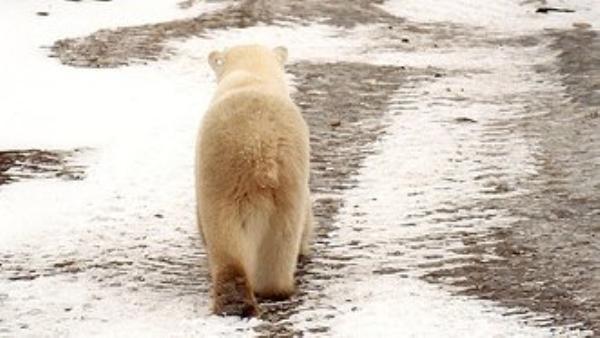
Do constant reminders of the threat of climate change leave you feeling vaguely guilty, but unsure what to do about it? Margaret Atkins suggests taking a tip from Saint Thomas Aquinas, whose feast we celebrate today. [i]
The Christian Church has been thinking about moral issues for two millennia, and to help it in this task it has always drawn on traditions that go back still further in time. Today, however, we face quite new problems: St Augustine or St Thomas Aquinas could never have imagined a Pope mentioning energy conservation in his Christmas Sermon.[ii] Does the tradition of the Church then have anything to contribute to contemporary debates? To mark the Feast of St Thomas on 28th January, here is a reflection on our ethical response to global warming that draws both implicitly and explicitly on St Thomas' writings, in particular on his incorporation into Christian moral thinking of Aristotle's analysis of the virtues.
The problem
'I do not understand my own actions. For I do not do what I want, but the very thing that I hate' (Romans 7.15). Climate change creates a striking gap between our professed beliefs and ideals and our actual practice. Even the greenest Briton is pumping more than her fair share of carbon into the atmosphere. All of us want something to be done about it, yet very few of us want to do anything about it ourselves. We are highly anxious about the threat; yet we seem incapable of changing our lives in any fundamental way. Our first task, then is simply to try to understand this inconsistency a little better.
There seem to be at least three reasons for it. (a) In the first place, we often feel that we have very little choice about the way that we conduct our everyday lives: we are imprisoned by the practical structures, and by the social expectations, of our society. 'We would love to walk to work,' we say, 'But it wouldn't be safe. Anyway, it would take too long.' 'Personally, I'd be delighted to eat less meat, but my family complain if they don't get their steak.' 'In the old days we piled all the children into the back of the hatchback, but now that's illegal so we've bought a 4x4.'
(b) Secondly, we are bewildered by the sheer scale and complexity of the questions. Global warming raises hard problems not only in science, but also in politics, economics and ethics. Even the experts do not seem to agree, and it is very difficult for the layperson to assess the significance of their disagreements and uncertainties. It is hardly surprising, then, that the whole topic leaves us feeling confused and indecisive.
(c) Thirdly, it is hard to grasp the significance of our individual actions in the context of the whole globe. On the one hand, it seems that our own lives hardly matter: surely it makes an infinitesimal difference whether or not I drive to the shops. On the other hand, every single thing we do has some effect; moreover, such effects are both unknowable and unlimited in their range. We are never off-duty when it comes to carbon emissions. Every drop of water I drink, every strand of cotton that I wear, every word I write on my computer, adds to my carbon footprint; and every atom of carbon in the atmosphere contributes to the total. Knowing that, who wouldn't feel anxious?
The combined effect of these three features of global warming is to paralyse us. Perhaps we need a different way of thinking about how best to act, one that makes the idea of living well seem manageable.
Personal responsibility[iii]
To be responsible for an action, we need to be able to do three things:
(i) to characterise the action;
(ii) to identify ourselves as the agents of it;
(iii) to understand its likely effects.
The typical philosophy text book gives us cases in which it is relatively straightforward to do these three things. Take this example: a fat potholer is stuck in a narrow passage and he and his colleagues are threatened by rising water. Would it be permissible to use dynamite to make the hole bigger so that the rest of the group can escape, even though the fat potholer would die?[iv] The action is to use dynamite to make the hole bigger; the agents are the rest of the group; the effects are to kill the fat potholer and save the lives of the rest. The right decision may not be obvious, but at least it is clear who is responsible for whatever is done.
In earlier times, it seemed that even in matters of conservation we could identify responsibility in a similar way; for most contemporary environmental cases this is impossible. For example, contrast the actual extinction of passenger pigeons with the potential extinction of polar bears.
What caused the extinction of the passenger pigeon?
The action: hunting pigeons.
The agents: the hunters.
The relevant effects: dead pigeons.
If the hunters had known, or reflected, a little more than they did, they would have realised that they had a straightforward choice: stop hunting and lose the immediate pleasures from hunting and eating pigeons, or carry on hunting and kill all the pigeons.
What might cause the extinction of the polar bear?
An indefinitely large set of actions, interconnected in very complex ways, and mostly innocent in themselves.
The responsibility for the effects belongs to an indefinite number of agents, and is not straightforwardly identifiable, attributable, or measurable.
The effects of individual actions are predictable only with great difficulty and incompletely.
No wonder we find it difficult to act responsibly in the face of such problems.
Virtues versus goals
Following the inspiration of Aquinas, I would like to argue that the paralysing effect of such complexity on our actions can be defused if, for the purposes of personal ethics, we focus not on consequences, but on virtues. Let me take a simple example for comparison to show how this might work. Suppose that you are a wedding reception and some rather fine gateau is available at the buffet. How do you decide how many pieces to take? It would be rather eccentric to do so by counting first the number of guests and next the number of pieces of gateau, and then working out what is fair. Rather, you are likely to think about what is or is not greedy. Better still, you might act in a moderate way without needing to reflect about it: you are already not a greedy person, so that you do the right thing without even consciously thinking about it. The virtues are dispositions or states of character, and if we possess them, we naturally behave in a certain way. Aquinas says that the virtues allow us to act consistently, promptly and easily, without having to work out from scratch each time what to do.[v]
To possess a virtue is to have your mind and emotions ordered and educated so that you are easily able to act in a good and reasonable way. For this, two further things are also needed. The first is a serious and clear sense of what the virtue in question involves. For you to know without effort or reflection how many pieces of gateau to take, then at some point some people must have thought deeply about questions of this sort, and you must have learnt the right kinds of answer to them, and made such answers your own.
Secondly, you need trust. Think about the wedding reception again: in taking your piece of gateau without having to worry about whether everyone else will have enough, you are trusting that your hosts have thought about this in advance, on behalf of all the guests. It is only if other people take too much that you might have to worry yourself. Similarly, to be able to think about the Christian life primarily in terms of virtues rather than overall consequences depends upon an unanxious trust that if you yourself act well, the rest can be left in the hands of Providence. This has been a fundamental part of the Christian tradition since the Sermon on the Mount: 'Look at the birds of the air: they neither sow nor reap nor gather into barns.... Consider the lilies of the fields, how they grow; they neither toil nor spin.... Therefore do not be anxious about tomorrow.'[vi]
Christ's greatest disciples have followed his advice. A lovely prayer of St Francis de Sales runs,
Do not look forward to what might happen tomorrow; the same everlasting Father who cares for you today will take care of you tomorrow and every day. Either he will shield you from unnecessary suffering or He will give you unfailing strength to bear it. Be at peace, then, and put aside all anxious thoughts and imaginings.
Or as Edith Stein, who had more cause than most to know what she was talking about, once wrote: 'Place all your cares for the future trustfully into the hands of God and allow yourself to be led completely by the Lord like a child. Then you are sure that you will not miss your way.'[vii] Such examples make it clear that trust in Providence is never an excuse for doing nothing ourselves; rather it builds for us that foundation of peace which allows us to act effectively and steadily for the good.
Global warming and the virtues
Can we identify the virtues that are relevant to climate change? They fall into at least four groups. The first consists of those virtues that help us act wisely with respect to material goods and pleasures. Aquinas would have put these under the general heading of temperantia. The English 'temperance' covers a much narrower range than St Thomas' virtue; a better translation might be 'temperateness'.[viii] Related virtues would include moderation, frugality and abstinence. These virtues are perhaps the most unfashionable sort, and yet the most vital for responding to environmental issues.
The second group help us to treat other people and other creatures as we should; Aquinas would have attached these to justice. Examples of relevant virtues here are generosity, compassion, respectfulness, peaceableness and humility. The third group relate to our understanding; for St Thomas they come under prudentia, or practical wisdom. They include attentiveness, good judgement, studiousness, thoughtfulness, creativity, independence of thought and honesty. The fourth group deal with our attitude to our own actions and experiences, and St Thomas would gather them together under courage. Here we find, for example, determination, hopefulness, industriousness and patience.
Each of these virtues is valuable in itself: they are not merely tools for reducing carbon emissions. At the same time, each of them may be developed with an eye on global warming: our studiousness, for example, ought to include an effort to understand the basic issues of climate change, and our moderate use of material goods to include the consumption of energy.
A decent sufficiency
I have suggested that the virtues associated with temperateness are of fundamental importance for green issues. Suppose we take these as our starting-point. Now the key question we will ask about our personal response to climate change will be not, 'Can I act to reduce global carbon dioxide by x%?', but rather, 'Am I living with the appropriate simplicity?'
If we are to live simply, the first thing we need to know is what counts as simple. In the context of a discussion of almsgiving, Aquinas made a useful distinction between the things necessary for the convenientia vitae, what we might call 'a decent sufficiency', and luxury or superfluity.[ix] As levels of consumption steadily rise, driven always by the anxieties of advertising and the imperative of profit, it becomes harder and harder for us to identify, or acknowledge, our excesses. Our first task is to do just that. Relatedly, we need to challenge the pervasive myth that whenever 'standard of living' rises, people are better off. Of course this is true for the very poor; it is equally obviously untrue for the very rich. The hard question is: at what point does it cease to be true; in other words, where does luxury begin?
One wit defined puritanism as 'the lurking fear that someone, somewhere, may be happy'.[x] Temperantia has had a bad press because it has been associated with joylessness. Christian asceticism, however, should never be puritanical in that sense, for it aims precisely at true happiness. In fact, it is an intrinsic part of our gratitude for the good things in life: to quote G.K.Chesterton, ''Your should thank God for beef and burgundy by not taking too much of them'.[xi] The point is that living virtuously is not just good for the planet, it is good for us. We really will flourish more as human beings if we are liberated from our slavery to the world of consumption. That is one reason why we can afford to be unanxious in our efforts to practise such virtues, for they are worthwhile whatever the state of the planet.
The communal dimension
We cannot live virtuously as isolated individuals. There are a variety of ways in which we need communities for this. For example, we need to be able to define and understand the virtues, and this is best done through shared enquiry and experience. Again, we need to work together in order to educate our children into the virtues: they will be influenced by all the adults they encounter, and by the general ethos of the society in which they live. Similarly, we need communities to support each another in living virtuously. Nothing is more dispiriting than to feel that you are the only person making an effort; nothing more encouraging than a fellow-enthusiast. Finally, we need communities to provide the practical structures that assist virtuous living: if there are good local buses and convenient recycling facilities, then living in a greener way becomes possible.[xii] The churches, of course, have a vital role to play here as communities with shared ideals within which we can collaborate to explore, promote and sustain
the virtues.
Defusing the paralysis
Finally, let me return to the three reasons that I originally identified for the gap between our ideals and our response in the face of climate change. It can help us with all of these, I suggest, if we think about ethics in terms of the virtues. In response to (a), our seeming lack of choice about the way we conduct our lives, I have argued that in dealing with lack of freedom in society we need the help and support of a local community, based on a shared understanding of and commitment to virtuous living. In response to (b), our bewilderment at the scale and complexity of the problem, we can say that focusing on virtues rather than on goals requires a general grasp of and alertness to key issues, but not detailed expert knowledge. Moreover, as the virtues are important for their own sake, nothing is lost if the experts turn out to be wrong. In response to (c), the difficulty of relating our individual actions to the global whole, if we concentrate onmoving towards a simpler lifestyle, we will focus on what is appropriate for us (a 'decent sufficiency') rather than on an abstract notion of global justice. Therefore we do not need to be anxious about the detailed distant consequences of our actions; nor, conversely, can we see the way we live as unimportant.
In short, we need to resist two opposite temptations. Both of them create anxiety and frustration and neither of them are effective in practice. One is to imagine that we are solely responsible for the future of the planet, when in truth that is in the hands of God. 'For us there is only the trying,' as the poet T.S. Eliot puts it, 'The rest is not our business'.[xiii] The other temptation is to give up because we feel that we can achieve so little. For the trying is our business. To try to live our lives wisely, justly, with courage and temperateness, and on top of all these to put on love[xiv] - that is our Christian calling. And that, surely, would be no small achievement, whatever its global effects.
Sr Margaret Atkins is a member of the Augustinian community at Boarbank Hall, Grange-over-Sands, Cumbria. She is co-editor of 'Aquinas: Disputed Questions on the Virtues' (CUP, 2005) and for the last three years has been coordinator of an annual holiday/retreat/study week for young Catholics, also called Thinking Faith.
 Boarbank Hall Augustinian Community
Aquinas: Disputed Questions on the Virtues
Thinking Faith Retreat/Study Week at Boarbank Hall
[i] This article is based on a talk given at a colloquium on the ethics of climate change, given at Blackfriars, Oxford, on 17th November 2008. I am grateful to the Regent of Studies and to the Oxford Dominicans for the organisation of this colloquium (see www.bfriars.ox.ac.uk/climatechange), and for permission to reuse the material.
[ii] Benedict XVI, Homily at Midnight Mass for Christmas 2007, available on: www.vatican.va/holy_father/benedict_xvi/homilies/
2007/documents/hf_ben-xvi_hom_20071224_christmas_en.html
[iii] Political and personal responsibility are complementary and interrelated. Both are important, but my focus here is on personal responsibility (i.e. that which is not related to political decision-making). Much of this is intrinsically communal, in particular our behaviour at work.
[iv] G.E.M.Anscombe, 'Action, Intention and “Double Effect”', reprinted in Mary Geach and Luke Gormally (ed.) Human Life, Action and Ethics: Essays by G.E.M.Anscombe, Imprint Academic 2005, p.221.
[v] Disputed Questions on the Virtues: On the Virtues in General, article 1, response.
[vi] Matthew 6.26, 28, 34.
[vii] Quoted in Edith Stein, Öffne dein Herz für das Licht, Butzon and Bercker 2007, p.10.
[viii] See further, Margaret Atkins, 'Temperateness, Justice and Chocolate', Priests and People, October 2003, also available from www.thepastoralreview.org/cgi-bin/archive_db.cgi?priestsppl-00090. For Aquinas on the cardinal virtues see Summa Theologiae and Disputed Questions on the Virtues: the Cardinal Virtues. See also Jean Porter, The Recovery of Virtue, SPCK 1990. Aquinas' Summa is available on line at: www.ccel.org/ccel/aquinas/summa.html
[ix] See e.g. Summa Theologiae 2a.2ae.32.6.
[x] H.L.Mencken, quoted in Antony Jay (ed.), The Oxford Book of Political Quotations, OUP 2007, p. 87.
[xi] Orthodoxy, Fontana 1961, p. 64.
[xii] In particular, we often need the support of a like-minded group of people to resist wider society where it pushes us into behaving foolishly. An obvious example is the great increase in regulation of the workplace, which can make it impossible to use common sense in order to live more simply.
[xiii] 'East Coker', from The Four Quartets.
[xiv] Colossians 3.14.