

Faith, abuse and the search for healing


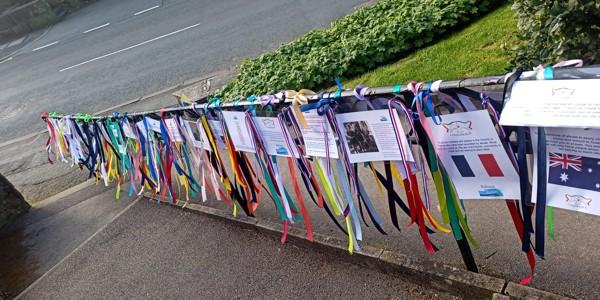
Antonia Sobocki’s journey of healing from childhood abuse has taken many turns, including steps towards and away from the Church, as she tells the Things I Wish I Knew podcast. One of those has been the establishment of the LOUDfence movement, which seeks to bring about the reconciliation that Antonia herself has sought.
Conversations about abuse within the Church are often painful. They touch on questions about trust, belonging and faith. For victim-survivors, these questions are not abstract; they shape how they understand themselves, their past and their relationship with God.
In a recent conversation with Julia Corcoran on the Things I Wish I Knew podcast, Antonia Sobocki spoke candidly about her journey of healing from childhood abuse. Her story is not simply a testimony of trauma. It is also a reflection on resilience, faith and the role that community can play in the long work of recovery.
Antonia grew up with a strong connection to the Church. Like many people raised in Catholic communities, parish life was part of her childhood rhythm. Within that setting, she developed a trusting relationship with her parish priest, whose presence offered encouragement and pastoral care during difficult moments.
At the same time, Antonia was living with the hidden reality of familial abuse. The support she experienced within the parish did not erase the pain she carried, but it did shape her early sense that faith could be a source of hope and stability. For a time, these two realities co-existed side by side.
This balance was disrupted years later, though, when Antonia encountered the findings of the Pennsylvania Grand Jury report into clerical abuse in the United States. The report documented widespread patterns of abuse and cover-up within the Church over decades. For Antonia, the revelations were devastating. They challenged her understanding of an institution that had once felt safe and trustworthy.
She describes the experience as a moment of profound loss. The Church that had helped shape and nourish her faith now seemed implicated in the very kind of suffering she had endured. The sense of betrayal was difficult to come to terms with. Trust in the institution was shaken, and with it the sense of belonging that had once been part of her spiritual life.
For many victim-survivors, this tension is deeply familiar. Faith and institutional religion are often closely intertwined, yet they are not identical. When trust in the institution collapses, believers may find themselves asking whether faith itself can survive.
Antonia’s response was not to abandon faith altogether. Instead, she began a search for new ways of living it. For a time, this meant distancing herself from the Church and acknowledging what she later described as a ‘church-shaped hole’ in her life. The language is striking because it captures both absence and longing. Something essential had been lost, yet the desire for faith had not disappeared.
The journey that followed was neither quick nor straightforward. Healing from trauma rarely is. What began to make a difference was the discovery that others were walking similar paths. Meeting people who were also victim-survivors of abuse opened the possibility of speaking honestly about experiences that had often been hidden or misunderstood.
This sense of shared experience eventually led to the creation of an initiative known as LOUDfence. The project creates a space for victim-survivors to express grief and solidarity. Joined by supporters, they tie ribbons, messages or symbols to a fence in a public place. Each ribbon represents a voice that refuses to remain silent.
The symbolism is deliberate. Fences are structures that mark boundaries. By covering them with messages and ribbons, LOUDfence turns them into places of witness and remembrance. They become spaces where victim-survivors can be seen and heard, and where communities are invited to acknowledge suffering that has too often been ignored.
For Antonia, the initiative has been both a personal and communal form of healing. It allows victim-survivors to express grief publicly while building networks of support. The act of gathering together, even around something as simple as a fence, creates a sense of solidarity that counters the isolation many victim-survivors feel.
Her reflections also highlight the importance of listening. Too often, victim-survivors encounter disbelief, silence or attempts to move too quickly past uncomfortable truths. Antonia argues that genuine healing requires patience and compassion. Listening without defensiveness or judgement is an essential first step.
This challenge extends to the Church itself. If the Church is to remain a credible place of faith and community, it must continue to listen carefully to those who have suffered. Structures and safeguarding policies are essential, but they must be accompanied by humility and openness. Victim-survivors need more than acknowledgement of past failures. They need spaces where their experiences shape the future of the community.
Antonia’s story also reminds us that faith can take unexpected forms. For some victim-survivors, faith remains closely connected to parish life and sacramental practice. For others, it may be expressed in quieter or less institutional ways, but it continues to offer a language of meaning, hope and dignity.
Resilience in such journeys should not obscure the seriousness of the harm that victim-survivors have endured. Yet it does point to a truth at the heart of Christian faith – even in situations marked by loss, people continue to search for healing, connection and grace.
Listening to victim-survivors is therefore not simply an act of pastoral care. It is also an invitation to the wider Church. Their stories challenge communities to become more attentive, compassionate and honest about the realities they face.
This article reflects the first part of a conversation with Antonia Sobocki, which you can hear in the latest episode of the Things I Wish I Knew podcast. The next episode will continue this important discussion.
Listen to ‘Things I Wish I Knew About Reconciliation After Abuse’; and to get all of our new episodes and catch up on our back catalogue, subscribe now >>
You can follow us on Instagram @tiwik_pod.
The Jesuits in Britain are committed to the highest standards of safeguarding. The protection of children and vulnerable adults absolutely underpins all of our work. To this end, we are committed to achieving justice for victim-survivors of abuse, as well as their care and support. You can read more here >>