
The God of conversation


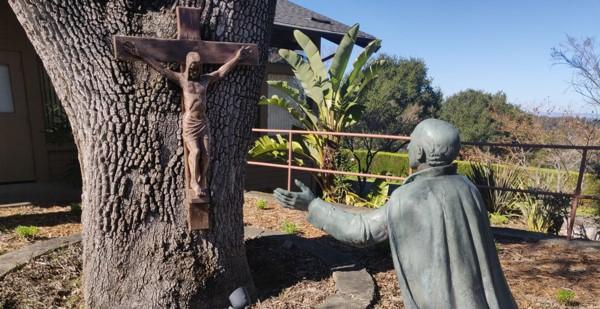
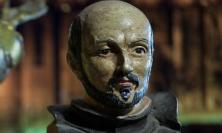
St Ignatius of Loyola, the Jesuit founder whose feast we celebrate on 31 July, channelled his own spiritual experiences to arrive at insights which he then dedicated his life to sharing with others. ‘Through his struggles with outward penances, Ignatius discovered a God not of practices and rules, but of conversation’, says Thomas Flowers SJ, and one can see the Spiritual Exercises as facilitating one long conversation with a God who loves to talk to us.
Ignatius of Loyola never managed to make God follow his rules. In the early days of his spiritual conversion, Ignatius thought he could force God to do things his way. During his time in Manresa in 1522–1523, he went to spiritual extremes. He lived as ascetically as he could, eating little, praying much and mortifying his body with penance. He even let his hair and nails grow long, as signs of his contempt for the vanity that had once driven him. He was, at the same time, tormented by scruples: constantly convinced that he had not confessed his sins properly, as the same guilty thoughts revolved over and over in mind. His anguish reached such a point that he even once considered throwing himself off a balcony. Amid this agitation, he remembered the example of ‘a saint who, in order to obtain from God something that he wanted very much, refused to eat for many days, until he got it’.[1] So he grasped at the same method, resolving ‘that he would not eat or drink until God came to his aid, or unless he saw that his death was quite close’.[2] He reasoned that God would have no choice but to save him.
Ignatius’s plan to coerce God failed. After a week, his confessor ordered him to break his fast, and it was only after he had begun to eat and drink again, and had engaged in more prayer and examination, that Ignatius found peace and freedom from his scruples. Indeed, ‘after he began to be consoled by God’ and noticed the good he was now able to do in his ministry to others, ‘he gave up those extremes he had formerly practiced’.[3] Slowly it dawned on him that God was not asking him to torture himself, and that he could not manufacture the peace he sought. So he gave up excessive penances and began to cut his hair and trim his nails normally. Ignatius’s eschewal of extreme penance and his decision to cut his nails can seem trivial in the long arc of his conversion. But these decisions reveal a fundamental shift in his understanding of the identity of God. Through his struggles with outward penances, Ignatius discovered a God not of practices and rules, but of conversation.
We speak of rules incessantly both in the Christian tradition generally and in the Ignatian tradition specifically. As Christians, we often talk about morality in terms of rules, above all citing the Ten Commandments and the Great Commandment, but also suggesting, for example, that the Beatitudes should be seen as gospel imperatives that update the Mosaic law. As Catholics, we have yet more lists of moral rules, based particularly on the teachings of church councils and the papal magisterium. We likewise concern ourselves with liturgical rules and canon law. In the Ignatian tradition, we add rules for how to live and pray. Thus the Spiritual Exercises provide us with the Rules for the Discernment of Spirits and the Rules for Thinking with the Church, not to mention the lesser used rules for moderating food and distributing alms.
We can be rather rule-minded. But as Ignatius came to know God better, he learned that rules do not exist to oblige us: they exist to guide us into conversation with God. It is an insight born of Ignatius’s very personal experience of God that reveals something true about all rules in the Christian tradition: the rules handed onto us are never ends unto themselves. Rules exist in morality, church practice, liturgy and spirituality in order to open us up to a relationship with the God who longs to converse with us.
By the time Ignatius composed the rules ‘to perceive and somewhat understand the motions caused in the soul by the diverse spirits’, which we commonly refer to as the Rules for the Discernment of Spirits, he knew that God was not bound by rules, and that rules alone cannot save us from our spiritual ailments. This makes the rules he composed peculiar. What he outlines in these rules, indeed, is not a set of binding laws or behavioural norms, but descriptions of the characteristic behaviours of God’s spirit and the evil spirit, and a set of counsels for how to perceive which spirit is which and how to respond when under the influence of one or the other. Thus, in the second rule, Ignatius tells us that ‘in the case of persons who are earnestly purging away their sins . . . it is characteristic of the evil spirit to cause gnawing anxiety, to sadden, and to set up obstacles’. On the other hand, ‘it is characteristic of the good spirit to stir up courage and strength, consolations, tears, inspirations, and tranquility’.[4] In these rules, Ignatius is not trying to establish parameters for our behaviour, but rather describing the characteristic behaviour of the spirits that move us. He is not telling us what we must do to please God, but rather sharing with us what God is like so that we will recognise God’s voice when we hear it.
Ignatius was convinced that God was constantly at work in the world and constantly speaking to us. He makes this clear in the last exercise of the Spiritual Exercises, the Contemplation to Attain Love. In one of the two notes Ignatius provides before presenting the exercise proper, he emphasises that ‘love consists in a mutual communication between the two persons’, wherein ‘the one who loves gives and communicates to the beloved what he or she has’ and ‘the beloved in return does the same’.[5] Further on in the exercise, he describes in careful detail ‘how God labours and works for me in all the creatures on the face of the earth’, for he ‘is working in the heavens, elements, plants, fruits, cattle, and all the rest’.[6] God is tirelessly at work ‘for me’ in everything that exists because this is how God loves, how God communicates as lover to beloved. We have no need to coerce God into action on our behalf: before we even perceive it, God is already at work in everything for our sake.
God’s relentless way of loving us is what makes our rules make sense. In the presentation of the Ten Commandments in both Exodus and Deuteronomy, the beginning point is not God’s command. For while the first commandment is that ‘you shall have no other gods besides me’, these words do not appear in isolation; rather, they follow the declaration that ‘I am the Lord your God, who brought you out of the land of Egypt, out of the house of slavery’.[7] Before God gives his people rules to live by, he gives them a reason to listen to those rules, a reason to believe that the rules will be for their good. For the one who pronounces the rules is the one who acts on behalf of the people to whom the rules are addressed, the one who has worked wonders to save them from slavery. The rules exist in the context of that relationship; indeed, they exist to further that relationship, to point the people towards the God who cares for them.
This God who cares for us is the God who wishes to converse with us. Ignatius notes at the beginning of the Spiritual Exercises that, ‘when we are conversing with God our Lord and his saints, vocally or mentally, greater reverence is demanded of us than when we are using the intellect to understand’.[8] Ignatius presumed that God would be talking to us and that we would be talking to God – and that the saints would also be involved in the conversation. And he wanted, right at the outset of the Spiritual Exercises, to remind us that the goal was not to figure God out, but to be in God’s presence. To be reverent is to be attentive, to acknowledge the goodness and the holiness of the one in whose presence we stand. So Ignatius here urges us not merely to think about God, but to engage with God. He invites us, indeed, to converse with God.
One of the primary ways we converse with God in the Spiritual Exercises is through frequent recourse to what Ignatius calls colloquies. A colloquy, Ignatius explains, ‘is made, properly speaking, in the way one friend speaks to another, or a servant to one in authority – now begging a favour, now accusing oneself of some misdeed, now telling one’s concerns and asking counsel about them’.[9] Ignatius presents it at the end of the first exercise in the Spiritual Exercises, when he proposes concluding one’s prayer with three conversations: one with the Virgin Mary, one with Jesus, and one with God the Father. It is the first of many colloquies in which one making the Exercises will engage. In reverent attentiveness, the one making a colloquy is invited to speak of one’s concerns and to ask for counsel. Whether done with the formality of a servant to a lord or the intimacy of a friend to a friend, the fundamental exercise is one of mutual exchange – of speaking and listening, of giving and receiving, of asking and offering. It is, in many ways, the heart of the prayer of the Exercises, where one is transparent before the Lord and listens for God’s voice.
It is also the place where those of us who are more comfortable thinking of our relationship to God in terms of rules become most nervous. That was the earliest experience of the Jesuit Jerónimo Nadal with the Exercises: they seemed dangerous to him. When, in the 1530s, years after his experience in Manresa, Ignatius was a student at the University of Paris and gathering the companions around him with whom he would eventually form the Society of Jesus, he and his companions spent a good deal of time with Nadal. Nadal was also a student at the university, and also very interested in spiritual things. Ignatius and others in his group urged Nadal to make the Spiritual Exercises, as all of them had, convinced as they were of the power of these exercises to free a person from all that kept them from God and so bring one into intimate relationship with Christ. But Nadal refused. In one final conversation in which Ignatius tried to get him to relent, Nadal argued passionately that if he had the gospels, he had no need of the Exercises. And besides, the Exercises were bound to get Ignatius and his companions into trouble, to lead them to be suspected of heresy someday.[10] The Exercises, with their oddly familiar attitude towards God, seemed to violate all the rules.
It must have been a painful conversation for both Nadal and Ignatius. It was the last one that they would have for ten years. Ten years later, Nadal would make the Exercises and become not only a Jesuit, but a close confidant and collaborator of Ignatius’s. But while he conversed with Ignatius and professed his suspicions about the Exercises, it seems unlikely that his scepticism surprised Ignatius much: Nadal was stubborn and confused in ways that must have felt familiar to Ignatius. The trouble with the way that Ignatius was inviting Nadal to pray in the Spiritual Exercises was that it did not seem to follow the rules. Nadal knew the commandments and the Church’s prescriptions and proscriptions, and none of that, he thought, had anything to do with conversing with God ‘in the way one friend speaks to another’. Surely being a faithful Christian did not depend upon a ‘mutual communication’ between the lover and the beloved, but rather upon obeying the commandments of God. That, after all, is what Ignatius had once thought, too: that if he did all the right things, God would do what he wanted.
But if we begin to think our relationship with God is no more than a matter of following the rules, we lose sight of why the rules exist. Indeed, we can find ourselves thinking, like Ignatius did in Manresa, that we might use the rules to our advantage: that if we play the game right, we can get God to do what we want. The Spiritual Exercises offer an antidote to this. That was what Nadal had not yet learned in Paris, but what he would come to understand once he made the Exercises a decade later. The peculiarly descriptive rules of the Exercises invite us to consider not so much what we ought to do, but rather who God is, and who God calls us to be. The rules are not meant to limit us, but to invite us into conversation with the one who loves us.
Thomas Flowers SJ is assistant professor of Ignatian formation in the College of Philosophy and Letters at Saint Louis University and teaches Jesuit history and spiritualty to Jesuits in formation.
[1] Barton T. Geger SJ (ed.), A Pilgrim’s Testament: The Memoirs of Saint Ignatius of Loyola (Boston, 2020), §24.
[2] A Pilgrim’s Testament, §24.
[3] A Pilgrim’s Testament, §29.
[4] Spiritual Exercises, §315.
[5] Spiritual Exercises, §231.
[6] Spiritual Exercises, §236.
[7] Exodus 20:2-3; see also Deuteronomy 5:6-7.
[8] Spiritual Exercises, §3.
[9] Spiritual Exercises, §54.
[10] Nadal narrates this story in his Chronicon Natalis in Monumenta Historica Societatis Iesu: Epistolae P. Hieronymi Nadal Societatis Jesu (Madrid: 1898), vol. 1, 3 (§9–10).