
Is Catholic Social Teaching fundamentalist?


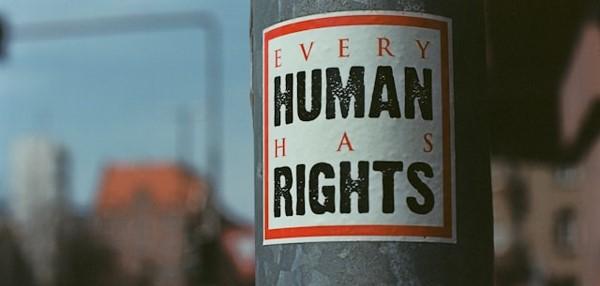
‘It’s my right’ – how often have you heard a justification of a particular action or claim begin with these words? Is it a starting point that the Catholic Church would endorse, or even use? As he concludes a series that looks at issues in politics and public life through the lens of Vatican II’s Declaration on Religious Liberty, Dignitatis humanae, Patrick Riordan SJ considers the place of the language of rights in church teaching and other forms of discourse.
Professor Nigel Biggar of Oxford published a book in 2020 with the title, What’s Wrong With Rights?[1] The book is directed against what he calls ‘rights fundamentalism’, an exaggerated reliance on the language of rights when pursuing moral or political causes. Is the Catholic Church in danger of falling foul of this when she embraces the modern language of rights, as she did sixty years ago in the Second Vatican Council’s Declaration on Religious Liberty, Dignitatis humanae?
According to Biggar, rights fundamentalism makes moral or natural rights foundational for morality. It sees them as prior to civil law and the institution of legal rights, as non-negotiable in their demands, and as overriding political concerns about scarcity of resources, viability or sustainability. There is no school of rights fundamentalism as such, but Biggar finds examples of this way of thinking among advocates for the poor and deprived of the world, human rights lawyers, and some judges in national and international courts.
The principal difficulty with rights fundamentalism is that the language of rights monopolises moral discourse, and consequently political and legal discourses. Other very rich concepts such as duty and obligation, virtues, goods and values, which traditionally belong in the vocabulary of ethics and politics, are side-lined by the domination of rights-talk. Similarly, the insistence that legislation and adjudication are primarily about securing and implementing rights claims deprives politics of its role of creatively finding compromises between valid demands that cannot all be satisfied. The need for a prudential consideration of all relevant factors in making law, and in coming to judgement in adjudication, evaporates in face of the insistence that rights trump all other considerations. If rights are presumed to defeat all counter arguments, then the language of rights is unsatisfactory for deliberation on some contested issue, since the assertion of a right appears as a demand that may not be refused.
The rejection of rights fundamentalism does not entail the rejection of rights as such, but of an exaggerated emphasis on the existence of rights prior to all enactment in positive law and the pre-eminence of rights over concerns about public order and the common good. As an example of the fundamentalism he seeks to dispute, Biggar cites the invention of a right to ‘physician-assisted dying’ by the Supreme Court of Canada in 2015. The asserted right is interpreted to permit physicians to kill patients at their request, and to assist them in killing themselves. But that is concealed by the language. The judgement is based on assertions of rights to ‘life, liberty, and the security of the person’ enshrined in the Canadian Charter, which are vague and abstract. Basing the asserted rights exclusively on a reading of more abstract rights ignored any consideration of the requirements of public order or the common good. Biggar instead upholds an account of natural morality that acknowledges the roles of human goods, duties and obligations, virtues and common goods. Countering rights fundamentalism involves resisting any attribution of absolute status to rights, since they are all conditional on their legal context, the availability of enforcement mechanisms, and the related goods of public order and the common good.
What is to be said about the Catholic Church’s reliance on rights language in presenting her moral and social teaching? Does it fall into the trap of fundamentalism? Biggar addresses this question in a separate chapter, but his survey of sources does not go beyond Pope John XXIII’s Pacem in terris (1963). Surveying papal teaching and some prominent Catholic authors, he concludes: ‘All things considered, then, the modern Catholic tradition of rights does display a superior ability to recognize the larger, multi-faceted moral order of which “rights” are only a part; and it does recognize that morally justified positive rights are the socially contingent products of political deliberation about the common good’.[2] Emphasis on ‘right order’ as distinct from ‘an order of rights’, characterises this tradition. The following paragraphs make the case that Dignitatis humanae (DH) avoids fundamentalism by noting: (a) the grounding of liberties in human dignity; (b) the emphasis on duties; (c) the affirmation of the rights of communities; and (d) the role of rights in communicating dimensions of the human good for integral human fulfilment.
Pope John’s encyclical was the first papal document to embrace wholeheartedly the notion of human rights as appropriate for communicating aspects of Catholic teaching. This development reversed the rejection and suspicion that had characterised the Church’s stance towards any liberal regime since the French Revolution. The assertion of liberties, rights, as foundational for social and political order had seemed to be inseparable from the rejection of authority and, it was thought, must inevitably lead to attacks on the Church. Hence the suspicion. But Pope John and the Second Vatican Council in the 1960s could see the advantage of having the language of human rights – as propounded in the 1948 Universal Declaration – as a shared resource for international order and for the discussion of issues of justice and peace. The move to a more positive perception was enabled by the insight that human rights are not foundational, they are not self-grounding but are rooted in the dignity of the human person. That affirmation of the dignity of the person is one element of the Church’s teaching that saves it from rights fundamentalism.
As outlined in an earlier piece in this series, the affirmation of the right to religious liberty is combined with a consciousness of the dangers of exaggeration when rights are claimed absolutely. The declaration insists on the appropriate limits to the exercise of liberties and recognises the duties of individuals not to harm the social fabric. In following their conscience, people must respect the rights of others and the public order which it is the duty of civil authorities to uphold. This feature of equal emphasis on duties also safeguards the Church’s stance from the criticism of rights fundamentalism.
Those immersed in the ideology of rights are surprised that the Church claims the right to religious liberty not only for individuals, but also for herself. There is a long-running debate in philosophy whether there can be such a thing as group rights. The usual model is of an individual who can claim for her or himself the relevant right. This model is dominant in the philosophical justification of rights, and some authors such as James Griffin go so far as to assert that only adult humans capable of moral agency can actually have human rights.[3] This would exclude both infants and any incapacitated adults from human rights. In fairness, it must be noted that such exclusion does not entail that such individuals have no rights: Griffin affirms that they would retain moral rights. But debating this criterion underlines the dominance of focus on individuals who are in a position to raise claims to secure their freedom from interference, or their entitlement to various services. The declaration does not confine its claims to individuals; the first chapter on ‘The General Principle of Religious Freedom’ clearly extends the claims to religious communities: ‘The freedom or immunity from coercion in matters religious which is the endowment of persons as individuals is also to be recognized as their right when they act in community’ (DH §4).
This might appear to be a transposition of individuals’ rights to a corporate or communal setting, but the claims that follow in the rest of this paragraph make clear that the freedoms in question belong to religious communities as such. Beyond the same pair of claims of freedom from coercion and freedom to exercise religious liberty, raised already for individuals and now for communities, the Church extends the claims to matters that are distinctively corporate. She demands for herself and other religious communities freedom to govern themselves according to their own norms; freedom to select, train, appoint and transfer ministers; and the freedom to create educational, cultural, charitable and social organisations in conformity with their religious ideals. Some of the claims in this paragraph evidently reflect recent history in some jurisdictions in which the Church had been severely restricted in her entitlement to erect buildings, hold property or collect money. Included also is the freedom to apply her teaching to the full range of human activity, including social and political matters that concern the organisation of society. We have noted how the German Bishops have exercised this freedom in criticising political movements whose ideologies violate the human dignity of migrants.
There is a further condition mentioned in connection with the claimed liberty to teach and to preach her message, and to seek new adherents. Whatever methods are used in evangelising should always respect the dignity and freedoms of people, and the excesses sometimes associated with proselytising are to be avoided.
However, in spreading religious faith and in introducing religious practices everyone ought at all times to refrain from any manner of action which might seem to carry a hint of coercion or of a kind of persuasion that would be dishonorable or unworthy, especially when dealing with poor or uneducated people. Such a manner of action would have to be considered an abuse of one's right and a violation of the right of others. (DH §4)
It is worthy of note here that the Catholic Church is raising the claims to rights for all religious communities, and not just for herself, with the usual proviso that the exercise of the rights not violate public order or the rights of others. This is clearly an answer to the objection noted earlier that the Church in her former position demanded liberty for herself when in a minority, but did not concede it when in the majority.
A final point in relation to the danger of rights fundamentalism underlines that, in her usage of rights language, the Church appeals to realities more foundational than rights. This is usually the dignity of the human person. But there is a related category that fulfils the same function. This is referred to more recently in Church documents as ‘integral human fulfilment’, but the elements of this idea – the dimensions of human goods that would constitute human wellbeing – have been part of the Church’s social teaching for a long time. The language of rights has been adopted in the Catholic world as a convenient way of expressing those goods that belong to the realm of human flourishing. The ‘modern manifesto conception of human rights’ provides an outline of the common good, according to John Finnis, ‘that each and everyone’s well-being, in each of its basic aspects, must be considered and favoured at all times by those responsible for co-ordinating the common life’.[4]
In comparison with other documents of the Second Vatican Council, the Declaration on Religious Liberty seemed to be only of marginal weight and significance, if one were to note only the status of the document. Among four constitutions and nine decrees, there were three declarations. The other two deal with relations with non-Christian religions (Nostra aetate), and Christian education (Gravissimum educationis). Although the document has the status only of a declaration, its significance for the life of the Church in the world far exceeds the status attributed to it. Engagement with its content rather than its documentary status underlines the scale of the change achieved in the council: in the development of the Church’s self-understanding not only as teacher of the gospel truth, but also as promoter and protector of the dignity of human persons; and in the awareness of her role in the wider world, upholding the religious liberties of other faith communities, along with her own.
Patrick Riordan SJ is Senior Fellow in Political Philosophy and Catholic Social Thought at Campion Hall, University of Oxford. He is the author of Human Dignity and Liberal Politics: Catholic Possibilities for the Common Good (Washington, DC: Georgetown University Press, 2023) and co-editor, with Gavin Flood, of Connecting Ecologies: Integrating Responses to the Global Challenge (Abingdon, Oxon: Routledge, 2024).
Read more about the sixtieth anniversary of the Second Vatican Council’s Declaration on Religious Liberty, Dignitatis humanae >>
[1] Nigel Biggar, What’s Wrong With Rights? (Oxford: Oxford University Press, 2020).
[2] Biggar, What’s Wrong With Rights?, p. 92.
[3] James Griffin, On Human Rights (Oxford: Oxford University Press, 2008), pp. 32-3.
[4] John Finnis, Natural Law and Natural Rights (Oxford: Clarendon Press, 1980), p. 214.