
Gerard Manley Hopkins in Context


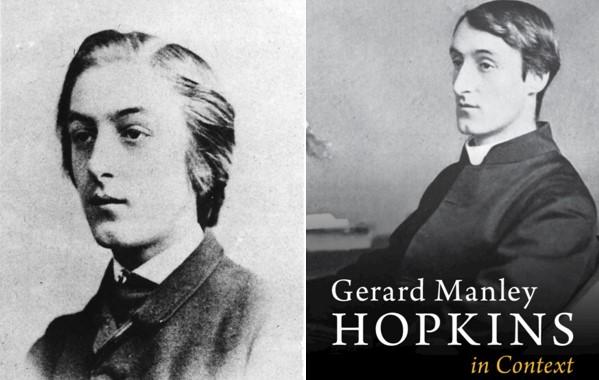
28 July this year marked the 181st anniversary of the birth of the Jesuit priest and poet, Gerard Manley Hopkins. Usually, those two designations are inverted. For most, Hopkins is primarily a poet – ‘the most distinctive and original’ of all nineteenth-century poets, according to the late Philip Endean SJ – and secondarily a Jesuit priest.
The tension between Hopkins’ ‘dual identities’ was the subject of an article by Endean in this publication some years ago. Shortly before he died, Endean also contributed to a collection of essays, edited by Martin Dubois, entitled Gerard Manley Hopkins in Context.
The volume incorporates nearly forty essays, each of which touches on an aspect of Hopkins’ identity. In addition to Hopkins the priest and Hopkins the poet, therefore, we can add Hopkins the classicist, Hopkins the Tractarian, Hopkins the biblical scholar, Hopkins the Oxonian, and so on.
This is an interdisciplinary volume, in other words. The chapters included are all relatively short, and are divided into seven sections: places, aesthetics, theology and philosophy, natural sciences and the environment, gender and sexuality, form, and reception.
As Finn Fordham’s contribution demonstrates, Hopkins’ lack of recognition in his own period added to his prestige in the eyes of modernist critics who repudiated Victorian literary sensibilities. In the decades since, Hopkins has been retroactively recruited into a number of different literary and cultural movements. Perhaps as much is attested to by precisely the diversity of academic disciplines represented in this collection. That said, the best of these essays seek to explode the Hopkins myth and thereby disentangle him from his legacy.
Philip Endean (for example) questions whether there is anything distinctively Jesuit about Hopkins’ poetry. 21st-century Catholics may see in Hopkins deeply emotional poetry and, in his profound feeling for nature, resonances with the ethos of the Society of Jesus. But any attempt to read in Hopkins’ poetry the influence of Ignatian spirituality, Endean argues, risks anachronism. Ignatian spirituality of the kind that we might recognise in 2025, ‘became established only in the twentieth century’. Certainly Hopkins’ poems are marked with intuitions which anticipated later developments in Jesuit thought. They cannot, however, be meaningfully described as having been influenced in this way by Jesuit spiritual practice.
There are further opportunities for some myth-busting elsewhere. Trent Pomplun’s chapter on ‘Scholastic Theology’ examines the well-worn claim that Hopkins was forced to drop theology in his fourth year at St Beuno’s because of his attachment to Duns Scotus. According to this narrative, Hopkins’ failure as a theologian (and thence his creative success as a poet) can be accounted to the anti-Scotist biases of his Suarezian masters. The story presents Hopkins as a misunderstood, intellectual renegade and perhaps adds a little to his legend: a man out of his times. For Pomplun, though, it doesn’t hold much water. Such provincialism, he proves, did not really exist during the period when Hopkins was at Beuno’s. The nomenclature of ‘Suarezians’ and ‘Scotists’ are ‘mere generalities’ unworthy both of Hopkins and of the Society.
Categorising Hopkins, it seems, is always a fool's errand and two wonderful essays in this collection make that point very directly. The first is Seán Hewitt’s essay on homosociality.
Hopkins is often read as a tortured soul, torn between pious devotion and unbidden desire. Where Hopkins uses the language of desire in his work – directed towards the figure of Christ, for example – such a reading sees only repression and contradiction. Skilfully, Hewitt demonstrates that no such contradiction need exist and in doing so, liberates Hopkins from 21st-century preconceptions. The language of desire that fills Hopkins’ poetry and his homiletics is not ‘sublimation’ or ‘substitution’. In fact, the ‘desiring feminised gaze’ was a staple of Oxonian Catholic and High Church Anglican culture. It is perhaps attention – the gaze desiring, frustrated, policed, cultivated – which is the real subject of his poetry.
The second is Jane Wright’s essay on address. Infrequently does criticism communicate clearly that which is emotionally profound in a work of art, but Wright’s argument goes some way to doing so here. Hopkins himself wrote about ‘bidding’ as a feature of his poetry: the ‘art or virtue of saying everything to or at the hearer, interesting him, holding him in the attitude of correspondent or addressed or at least concerned’. As Wright has it, Hopkins’ poems – in their complex and sometimes confusing combination of different modes of address – function as a kind of sonar: expressing into the universe, hoping that such expressions will find someone or something – man, beast or God – who is hearing, interested or at least concerned. Ultimately, Wright suggests, Hopkins’ project is a theological one. ‘Poetic address’, she writes, ‘is a way of asking how near or far God is, and, in turn, of finding God in mysterious places’.
Some of the essays are a little too broad in their brief and are less successful as a result. Michael Wheeler’s chapter on ‘The Bible’ attempts to negotiate the entirety of post-Reformation biblical reception and thus struggles to demonstrate direct relevance to the subject. Emily Taylor Merriman valiantly takes on the issue of Hopkins’ impact from 1950 to the present day. At times this chapter descends into lists of poets who admired and were influenced by him. The list, needless to say, is almost endless.
The breadth of the topics also leads to occasional overlaps and repetitions (an inevitability to some extent with edited volumes). We are told on four or five different occasions, for example, that Hopkins considered Liverpool and St Helens to be filthy hellholes: in chapters on ‘Northern England’, ‘Ecology’, and ‘Industry and Technology’.
These minor quibbles aside, the book is a success. It provides a chorus of voices, the diversity of which is certainly to be celebrated. It is appropriate, also, that the collection as a whole deferentially resigns itself to describing only the context within which Hopkins was writing rather than his influences. Implicit in this is the contention that Hopkins was and remains a true original: truly counter and truly spare and truly strange.